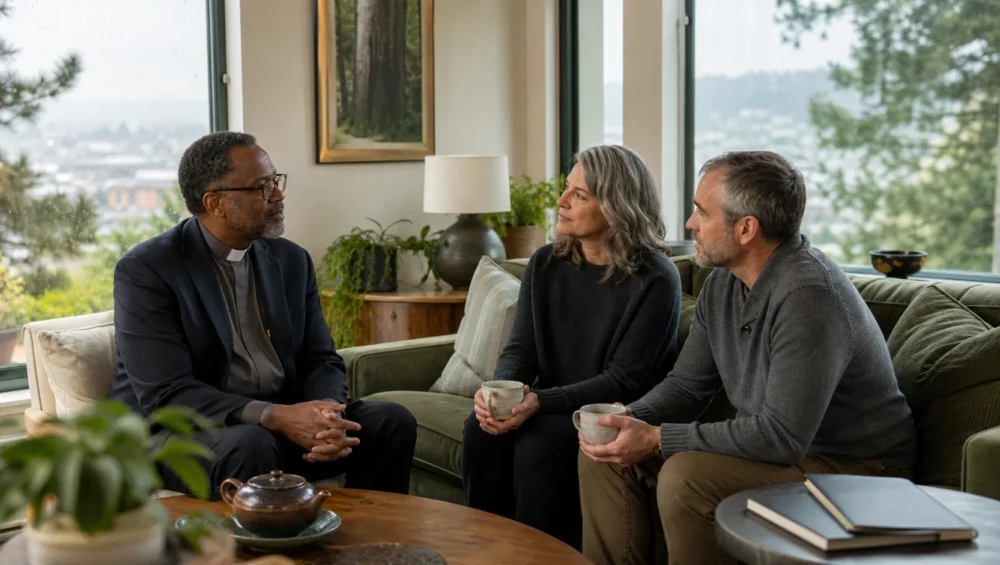
How Spiritual Care Supports Every Kind of Family
Hospice chaplain support in Portland often sounds like something only religious families would want. Many nonreligious families say no at first, then later find themselves wishing they had someone neutral to talk with about fear, love, and saying goodbye. When serious illness touches a home, big questions show up, whether a person believes in God or not.
Spiritual care in hospice is not just about religion. It is about what gives a person strength, what matters most to them, and how they want to be remembered. It includes meaning, values, relationships, and legacy. For some, that includes faith. For others, it is about nature, family, art, or simple human kindness.
At Vista River Hospice, we are a locally owned hospice serving Portland, Salem, and nearby communities. We tailor chaplain support to each family’s mix of beliefs, including secular and mixed-belief homes. In the fall and early winter, when days grow shorter and family gatherings can stir up strong emotions, many people feel these deeper questions even more, and gentle spiritual support can help everyone breathe a little easier.
What Hospice Chaplain Support in Portland Really Means
A hospice chaplain’s role is much broader than saying prayers. For nonreligious families, that can be a relief. Our focus is on the person and the family, not on a belief system.
A hospice chaplain can help by:
- Listening without judgment to worries, memories, and regrets
- Supporting life review, like talking through key moments and choices
- Helping ease fears around death and the dying process
- Supporting honest, caring conversations within the family
In Portland, families come from many backgrounds. Some are atheist or agnostic, some are spiritual but do not follow a religion, and many are interfaith or mixed-belief. Hospice chaplain support in Portland reflects this variety. Chaplains are trained to meet people where they are, not where someone thinks they should be.
Concrete ways chaplains may support your family include:
- Bedside visits focused on calm presence, not religious ritual
- Family meetings to talk about values, hopes, and worries
- Help with legacy projects like letters, audio recordings, or memory books
- Coordination with social workers and nurses, so care feels connected and steady
Chaplain visits are always by choice. They can include religious language, neutral language, or no spiritual language at all. The tone and content follow the patient’s and family’s comfort level and clear boundaries.
Respecting Nonreligious Beliefs and Boundaries
Many nonreligious families feel nervous about opening the door to any type of chaplain. Common worries include being preached to, feeling pressure to accept beliefs they do not share, or having religious phrases used at a raw and tender time.
A professional hospice chaplain does something different. They get curious about a person’s own worldview. That might be humanist, philosophical, nature-based, or simply centered on family and kindness. The chaplain then uses that as the base for support. They are there to support the meaning you already live by, not to change it.
For example, secular support can look like:
- Using nature images, like the changing light on the Willamette or autumn colors in local parks
- Focusing on legacy and impact instead of afterlife beliefs
- Centering talks on gratitude, relationships, and unfinished conversations
- Honoring music, books, or thinkers that have shaped the person’s life
At Vista River Hospice, we are committed to consent, cultural humility, and trauma-aware care. We know some people carry painful experiences with religion or other institutions. If someone says, “I do not want any religious language,” that request is respected. If they share a past hurt, we hold that story gently and do not push past their limits.
Emotional Support for the Whole Family Circle
Serious illness does not affect only the person in the bed. It touches everyone gathered around them. Chaplains offer emotional and spiritual support for the whole family circle, including those who do not connect with religion at all.
Families often need help with:
- Anticipatory grief, the sadness that comes before the loss
- Feelings of guilt about past choices or old arguments
- Fear about facing holidays or special dates without their loved one
- Strain between family members who see things differently
A chaplain can support or gently guide family gatherings, with or without any religious elements. This might include:
- Story-sharing circles, where each person shares a memory or funny moment
- Simple, nonreligious rituals like candle lighting, memory boxes, or reading favorite poems
- Quiet, supported goodbye moments that feel honest and not forced
Hospice chaplain support in Portland often works side by side with counselors, social workers, and bereavement services. Support usually does not stop at the moment of death. Families can be offered follow-up grief support that matches their beliefs and comfort level.
Children and teens especially need clear, kind explanations. A chaplain can:
- Offer age-appropriate language about serious illness and death
- Suggest creative outlets like drawing, letter-writing, or making a small memory project
- Help caregivers answer hard questions without religious framing, if that is what the family wants
Creating Meaningful Rituals Without Religion
Many nonreligious families still want something meaningful to mark an ending. They just do not want a traditional religious service. Chaplains can help design simple, personal ways to say goodbye that fit who the person is.
Some examples of secular rituals include:
- Building a music playlist and listening together at the bedside
- Planning a quiet nature visit along the river or in a favorite local park if the person is able
- Sharing a favorite meal or dessert with stories about why it mattered
- Reading poetry, quotes, or personal writings that match the person’s style
Planning ahead for memorials and for future seasons can help families feel a bit more steady. A chaplain can help you think through:
- How to honor the person’s humor, quirks, and values
- What kind of gathering would feel real, not forced
- Simple ways to remember them during future holidays or special days
Chaplains can also help capture stories. That might mean:
- Gentle writing prompts to help someone write down memories
- Audio or video recordings of stories or messages
- Photo projects that pair images with short captions or notes
These small efforts can bring comfort for years to come.
How to Ask for the Right Kind of Chaplain Support
Nonreligious families often feel most at ease when they state their needs clearly at the start. You are allowed to ask for the type of care that fits you. In fact, that is what we want.
You might say things like:
- “We are nonreligious. Can we focus on meaning and legacy, not religion?”
- “How do you usually support secular or mixed-belief families?”
- “If we change our minds, can we ask for fewer or more visits later?”
At Vista River Hospice, chaplain support is shaped around each person and family. Care plans can include:
- Flexible visit frequency, from rare check-ins to regular visits
- Clear communication about preferred language and topics to avoid
- Ongoing check-ins as needs and energy levels change
Hospice chaplain support in Portland is part of the hospice benefit. It is there to give comfort and clarity, not to add pressure or expectations. The goal is simple: to create space for honest connection, calm, and closure on your family’s terms, whether religious, spiritual, or fully secular.
Find Compassionate Spiritual Support for Your Family Today
If you or someone you love is navigating serious illness, we are here to offer calm, respectful guidance grounded in your values and beliefs. At Vista River Hospice, our team provides hospice chaplain support in Portland that focuses on listening, presence, and meaningful conversations for patients and families alike. Reach out today so we can talk through your needs and help you decide what kind of support feels right. You can also contact us to schedule a time to speak with a member of our team.