Finding Steady Ground After Hospice Ends
Grief after hospice often hits hardest when the house finally gets quiet. The equipment is gone, the nurses are not stopping by, and the phone is not ringing as much. You might be sorting through paperwork while Oregon rain taps against the windows and wondering how life can feel so different and so normal at the same time. Everyday moments like making coffee or folding laundry can feel heavy in a way they never did before.
Many people in Salem and Portland describe a mix of numbness, guilt, relief, anger, and a constant question in the back of their minds: Is this normal? Grief counseling in Salem, Oregon can offer a steady place to land during this confusing time. It gives you structure, someone who understands hospice loss, and a safe space where nothing you say is “too much.” In the sections that follow, we will walk through how grief can shift after hospice, what local support often looks like, and how to care for yourself as the seasons and holidays come around.
How Grief Changes After Hospice Care Ends
While your loved one was on hospice, you may have been very busy. There were medications to track, visits to plan, and hard decisions to make. That constant activity can hold back some of the grief. When the care ends, the silence can feel like it roars. The loss that you knew was coming now feels very real, and it can hit in waves.
People often notice a few common patterns after hospice ends:
- Feeling delayed grief, where strong emotions show up weeks or months later
- Second-guessing medical choices, even ones that felt right at the time
- Replaying the last days or last conversation over and over
- Feeling unsure what to do with time that used to be spent caregiving
Autumn and early winter in Oregon can make these feelings stronger. Shorter days, gray skies, and more time indoors can bring memories to the surface. Dates like family gatherings or winter holidays might feel heavier now. You may feel pressure to act “okay” on the outside while inside you are still trying to understand what life looks like without your person.
What Grief Counseling in Salem, Oregon Really Looks Like
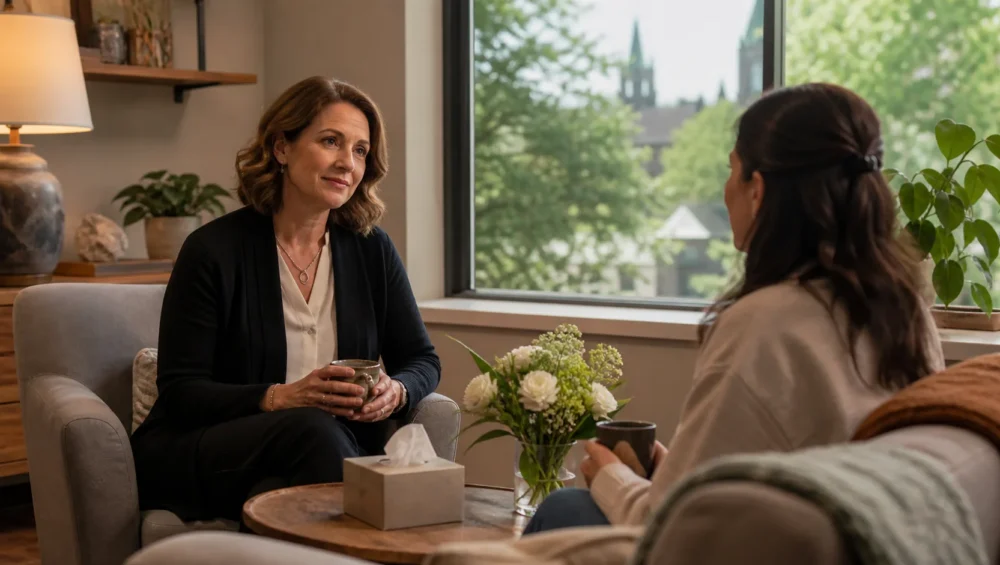
Grief counseling in Salem, Oregon is not about fixing you or making you “move on.” It is about having a guide as you learn how to live with your loss. Support can take a few different forms:
- One-on-one counseling with a grief counselor, social worker, or therapist
- Grief support groups where you sit with others who have had a hospice experience
- Family meetings where several family members share and plan
In a first counseling session, you can usually expect a simple, gentle start. You might talk about:
- Who your loved one was and what mattered most about them
- What the hospice time was like for you, both good and hard
- What your days look like now and how you cope when the waves of grief hit
- Small goals, like sleeping a bit better or finding one safe person to call
In Salem and nearby communities, some people prefer to meet in person, while others choose telehealth from home, especially if they live outside the city or have limited transportation. Group settings often connect people who share similar stories, such as caring for a spouse, parent, or adult child. Hearing “me too” from someone across the circle can be a powerful relief.
Vista River Hospice Bereavement Support for Families
When hospice care with us ends, our support for the family does not stop. At Vista River Hospice, bereavement is a real part of our care, not an afterthought. Families can expect follow-up after a patient’s death, which may include scheduled check-ins and phone support, along with options for more regular contact if that feels helpful.
Our bereavement services for families may include:
- Individual grief counseling for adults
- Grief support groups that bring together people who have experienced a hospice death
- Spiritual support for people from any faith tradition, mixed traditions, or no faith tradition
- Referrals to trusted community resources in Salem and Portland for added support
These services are available at no cost for a period of time after your loved one dies. Many families appreciate more contact during the first year, when dates like birthdays, anniversaries, and holidays can stir up strong emotions. We pay special attention to those tender times, because even if the outside world has moved on, those dates often reopen the ache inside.
Choosing the Right Grief Support in Salem
It can feel hard to know where to start when you are already exhausted by loss. A few simple questions can help you choose grief counseling in Salem, Oregon that fits you:
- Is the counselor licensed or trained in grief and loss work?
- Do they have experience with hospice and end-of-life situations?
- Do they respect my culture, background, and beliefs?
- Do their hours and location or telehealth options work for my life?
There are a few main types of support:
- Private counseling, which can offer very personal, flexible care
- Hospice-based bereavement support, which understands your specific hospice story
- Faith-based options, which can blend spiritual care and grief support
- Community groups, which can help you feel less alone and more understood
It may be time to look for support if you notice things like trouble sleeping for a long time, pulling away from friends and family, intense guilt that will not soften, difficulty getting through work or school, or a sense that you are stuck in one part of your grief. You do not have to wait for a crisis. Support can help even if you are simply tired of feeling like you have to hold everything alone.
Preparing for the First Fall and Winter Without Your Loved One
The first fall and winter without someone important can feel like a mountain. Empty chairs at the table, favorite recipes that no one makes, or holiday traditions you are not sure you want to keep can all bring a new wave of sadness. You might also feel pressure to “be strong” for children, partners, or parents, even when you are struggling too.
A few gentle tools can help this season feel a little more bearable:
- Create a small memorial ritual at home, such as lighting a candle or sharing a story
- Spend time outdoors in local parks or along the Willamette River, where fresh air can offer a bit of calm
- Say yes only to the social plans you truly have energy for, and allow yourself to say no to the rest
- Choose one or two traditions to keep, and give yourself permission to change or skip others
Counselors and bereavement staff can sit with you as you think through upcoming dates like birthdays, anniversaries, and holidays. Together, you can make simple plans so those days feel a little more held and a little less like they are sneaking up on you. Sometimes even knowing you have talked it through with someone who understands hospice grief can make those days easier to face.
Taking Your Next Step Toward Healing Support
Grief is a natural response to love, but that does not mean you have to go through it by yourself. Choosing grief counseling in Salem, Oregon is not a sign that you are weak or failing at coping. It is a sign that your relationship with the person who died matters enough to you that you want support in honoring it while you learn how to live in this new reality.
At Vista River Hospice, we walk beside families before and after a death, including through the changing seasons and the long, quiet evenings that follow. However your grief is showing up right now, there is room for it, and there are people here in the Salem community who are ready to listen and help you find steadier ground, one step at a time.
Find Steady Support For Your Grief Journey Today
If you are feeling overwhelmed by loss, you do not have to navigate it alone. At Vista River Hospice, we offer compassionate grief counseling in Salem, Oregon to help you process emotions at your own pace. Our team will listen, guide, and support you in finding comfort and meaning after a loss. To take the next step, please contact us so we can talk about what kind of support feels right for you.