Gentle Touch, Real Relief at Home
Caring for someone at home near the end of life can feel heavy. There are doctor visits, new medications, changes in mood and sleep, and the quiet worry that you might miss something important. Many families in Portland and Salem want to keep their loved one at home, but they also want real comfort, not just more pills.
Hospice massage therapy is one way to bring more ease into the home. It is very different from a spa massage. The goal is comfort, not cure. Sessions focus on easing pain, softening tight muscles, calming breathing, and helping the person feel safe and cared for in their own bed or favorite chair.
At our hospice, massage therapists are part of the care team. They work closely with nurses, social workers, and spiritual care providers so the touch they offer fits the bigger plan of care. Families often notice simple but meaningful changes, like:
- Less pain and muscle tension
- Easier, calmer breathing
- Less anxiety and worry
- Better rest and more peaceful time together
What Makes Hospice Massage Different From Spa Massage
Hospice massage therapy is gentle, flexible bodywork for people whose bodies are tired and fragile. Many patients are bedbound, use oxygen, or feel weak after walking only a few steps. A typical spa massage is not safe or comfortable in these situations.
Before each visit, therapists take time to review:
- The hospice care plan
- Current medications
- Recent symptoms or changes
- Any new medical devices or dressings
This helps them know where it is safe to touch and what to avoid, such as areas with blood clots, painful bone spots, recent surgeries, or medical equipment. The therapist will then adjust the session to fit the person’s energy and comfort that day.
Common changes from a spa-style massage include:
- Shorter visits, often focused on one or two areas
- Slower pace with breaks to rest or talk
- Extra pillows to support joints and protect sore spots
- Working through blankets or clothing rather than on bare skin
- Focusing on hands, feet, shoulders, or scalp instead of full-body work
Some families worry that massage might be too risky for an older or very sick person. With trained hospice therapists, touch is light, careful, and always guided by the medical team. Others think massage is only for people who already love being touched, but many patients who are unsure at first accept a simple, warm hand on the shoulder once they see how calming it can feel.
Inside a Home Visit: What Therapists Actually Do
When a massage therapist arrives for a home-visit arrival, they do not rush in and start working. First, they check in with the patient and caregiver. They listen for updates like, “She did not sleep well,” or “His breathing has been harder today.” Then they quietly notice:
- How the person is breathing
- Their facial expression and body tension
- The general mood in the room
From there, they suggest a plan for that visit: maybe gentle work on the feet for relaxation, or soft holds on the shoulders to ease tightness from breathing.
Techniques used in hospice massage often include:
- Light Swedish-style strokes for comfort
- Gentle holds that feel grounding and steady
- Slow, soft compressions through blankets
- Small, careful joint movements to reduce stiffness
Many patients are in hospital beds, recliners, or wheelchairs. Therapists get creative with positioning, using pillows and folded blankets to support the neck, lower back, and knees. Side-lying positions can help when lying flat is too hard on the lungs or back. They move slowly around oxygen tubing and other equipment so nothing gets pulled or tangled.
After the visit, the therapist documents what they did and what they noticed. They share this with the hospice team, including changes in pain, sleep, anxiety, or any new symptoms the family mentioned. That way, everyone is working from the same picture.
Adapting Massage for Pain, Dyspnea, and Anxiety
No two patients feel discomfort in the same way, so each massage plan is tailored. Still, there are some common themes.
For pain, therapists:
- Ask where it hurts and where touch feels safe
- Avoid fragile areas, like thin skin or bone spots
- Use slow, steady strokes to calm the nervous system
- Combine touch with warm blankets or soft positioning
Pain can show up in arthritic hands, sore lower backs from long hours in bed, or tight shoulders from working hard just to breathe. Gentle work around, not on, these areas can help the body relax and hurt a little less.
For dyspnea, or shortness of breath, touch can support calmer breathing. Therapists may:
- Soften tight muscles in the neck, shoulders, and upper back
- Choose positions that keep the chest open
- Move in rhythm with the patient’s breathing
- Avoid any pressure that makes breathing feel harder
For anxiety and restlessness, a quiet environment and predictable touch matter. Soft lighting, calm voices, and slow, repeated strokes can signal safety to the body. In the darker months, when evenings come early and worries can feel heavier, a steady, caring presence can ease that “on edge” feeling that some patients have, especially toward night.
What works for someone with advanced lung disease may not be right for someone living with dementia or heart failure. Therapists watch closely and adjust during every visit.
Protecting Fragile Skin and Delicate Bodies
Hospice patients often have very delicate skin. Age, medications like blood thinners or steroids, and weight loss can all make skin thinner and easier to bruise or tear. That is why protecting the skin is a big part of hospice massage work.
Therapists may:
- Use very light pressure, especially on arms and legs
- Change the direction of strokes to move with, not against, loose skin
- Use extra lotion or oil so the hands glide instead of drag
- Work through soft clothing or blankets when direct contact is not safe
They stay away from wounds, IVs, ports, feeding tubes, ostomy sites, and areas treated with recent radiation. Nurses and therapists talk with each other to keep track of new dressings or changes in the skin so they can avoid those spots.
There is also an emotional side to fragile skin. Being touched can feel scary if the person is afraid of being hurt. Therapists explain each step in simple, calm language, ask for consent before they begin, and check in often. If anything does not feel right, they stop right away.
Supporting Families and Choosing Massage in Portland
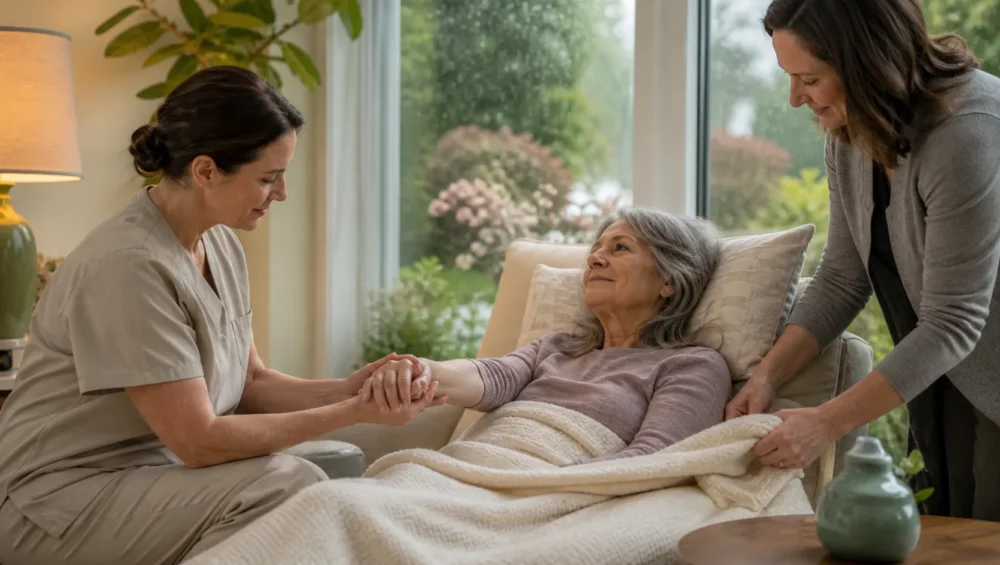
Hospice massage visits are not only for the patient. They can also give caregivers a short, much-needed break. While the therapist works, family members might:
- Take a quick nap or shower
- Step outside for fresh air
- Sit nearby and relax while watching their loved one unwind
Sometimes therapists invite caregivers to join in by teaching easy hand or foot massage techniques they can use between visits. This can help family members feel more confident and connected, especially when they are not sure how else to help.
Therapists also listen. Stories, worries, or quiet tears during a session are common. What is shared can guide the broader hospice team, so social workers and spiritual care providers know how to support the family more fully.
If you are already on hospice, you can ask your team if massage therapy is part of the care plan, how often visits may happen, and who might benefit most. If you are not yet on hospice but care for someone in Portland, Salem, or nearby communities, it can help to learn about options early. Hospice is meant for people with serious illness who want comfort-focused care at home, and massage therapy can be one more way to support that comfort.
Writing down questions, including key family members in the conversation, and asking your loved one about their feelings around touch and modesty can make adding hospice massage therapy services in Portland smoother for everyone.
Experience Comfort-Focused Compassionate Care Today
If you or a loved one could benefit from gentle, pain-relieving touch as part of hospice care, our team is here to help. Explore our specialized hospice massage therapy services in Portland to see how Vista River Hospice supports physical comfort and emotional well-being. We take time to understand each person’s needs so every session feels safe, respectful, and restorative. To discuss next steps or schedule a visit, please contact us.