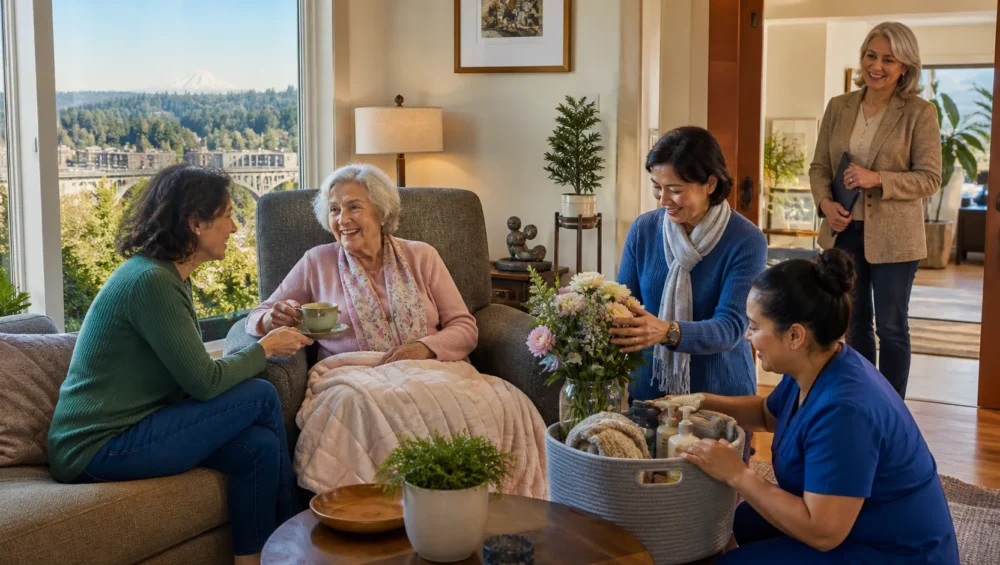
Finding the Right Help for Safety, Loneliness, and Rest
Caring for someone at the end of life is hard work, even when you love them deeply. Many families around Portland and Salem are trying to balance jobs, kids, traffic, and their own emotions while also making sure a loved one is not alone and is safe at home.
As days get shorter and weather turns cooler, it often feels even harder. People stay indoors more, moods dip, and small safety worries can grow. That is when having the right kind of hospice support around your loved one can make a real difference.
In hospice, there are three main kinds of non-physician support that can help: companions, volunteers, and aides. Each plays a different role for safety, comfort, and caregiver rest. Understanding what they can and cannot do helps you ask for the right help, at the right time.
At Vista River Hospice, we are locally owned and we bring these roles together into one clear, personal plan for each patient and family. We will walk through how each role works, when it is most helpful, and how to match support to what your loved one needs and what you, as a caregiver, can realistically keep doing.
Understanding Hospice Companions in Portland
Hospice companions are non-medical helpers who focus on being present, not on medical tasks. They may be paid sitters or part of services arranged through hospice, and their goal is simple: help the person feel less alone.
Common things hospice companions in Portland-area homes and care facilities might do include:
- Sitting and talking, or simply sitting quietly if that feels better
- Reading aloud, listening to music, or watching TV together
- Looking at photos and sharing memories
- Offering light, non-care help like warming tea or getting a blanket
- Taking short, gentle walks if it is safe
Their focus is emotional comfort, calm company, and watching for small changes, not hands-on care. There are clear limits. Companions cannot:
- Give medications
- Do wound care or medical treatments
- Help with heavy lifting or complex transfers
- Replace a home health aide or nurse
Companions are often most helpful when:
- Your loved one is fairly stable but alone for long stretches
- Family members work outside the home or live far away
- Shorter, darker days increase sadness, confusion, or fear
- You feel guilty leaving, but you also need to keep living your life
A good companion visit can ease that knot in your stomach when you step out the door, because you know someone warm and attentive is there.
What Hospice Volunteers Can and Cannot Do
Hospice volunteers are community members who give their time and are trained and coordinated by the hospice agency. When possible, they may be matched based on things like interests, faith background, language, or personality.
Hospice volunteers typically:
- Offer friendly visits and quiet presence
- Listen to stories and help with life review conversations
- Read, sing, or play gentle music
- Sit with the patient so a caregiver can take a short break
- Help with light tasks like folding a load of towels or tidying a table
- Sometimes help with small errands, depending on agency policies
Volunteers have clear boundaries. They are not there to:
- Provide bathing, toileting, or hands-on personal care
- Lift or move someone who needs physical assistance
- Stay for long, daily shifts like a private sitter might
- Make medical decisions or speak in place of the nurse or doctor
The emotional value of volunteers can be huge. They can become steady, trusted faces as the seasons and routines shift. They:
- Bring in a fresh, calm voice on hard days
- Offer comfort to family members who need someone outside the situation to talk to
- Help keep loneliness and boredom from taking over
- Give caregivers a chance to step outside, go to the store, or just sit and breathe
The Role of Hospice Aides for Hands-On Care
Hospice aides, often called home health aides or certified nursing assistants, are trained professionals. They provide hands-on personal care under the direction of the hospice nurse.
Aides typically help with:
- Bathing and showering, including hair washing
- Dressing and grooming, such as shaving or brushing hair
- Toileting, incontinence care, and changing briefs
- Safe transfers from bed to chair
- Repositioning in bed to help with comfort and skin care
- Simple comfort measures, like clean sheets and fresh clothes
They do not replace nurses. Aides cannot:
- Adjust medications or make medical decisions
- Perform skilled procedures that belong to a nurse
- Stay around the clock; their visits are scheduled
Aides are often needed most when:
- Falls are a concern, especially in tight bathrooms
- Your loved one is bedbound or needs help with almost every movement
- Caregivers are afraid of causing pain or injury while lifting or cleaning
- Bathing has become a major source of stress or arguments
A good aide does more than complete a task. They help protect dignity, reduce discomfort, and give family caregivers a chance to feel supported instead of alone with the hardest parts.
Matching Support to Loneliness, Safety, and Burnout
It can help to step back and ask one simple question: What is hurting most right now, loneliness, safety, or caregiver exhaustion?
Here is one way to think through it:
- If the main issue is loneliness or emotional distress, companions or volunteers are often the first step.
- If the main worry is physical safety and personal care, hospice aides are the priority.
- If everyone is worn out, a mix of all three may make the most sense.
A few common situations:
- A parent who still walks around but spends long days alone while family is at work may do well with a companion or volunteer visiting a few times a week.
- A frail spouse who gets dizzy in the bathroom may need regular aide visits for bathing, toileting, and safe transfers, plus a companion for extra company.
- A rural family that is on duty almost all the time may need creative planning with the hospice team so aides, companions, volunteers, and supportive friends or private-pay sitters work together.
As fall moves in, rain, early sunsets, and holidays on the horizon can stir up grief, depression, and mobility problems. Planning visits before this builds can prevent crises, like a fall in the dark or a caregiver simply hitting a wall.
The right mix of support often changes as illness changes. What worked fine a month ago may not feel right now. That is normal. A good hospice team checks in with you and adjusts, not with judgment, but with care.
How Vista River Hospice Coordinates the Right Team for You
Because Vista River Hospice is locally owned and serves the Portland, Salem, and nearby communities, we are closely tied to the homes and neighborhoods where our patients live. That helps us pay attention to things like commute times, family work schedules, and small cultural details that matter.
Here is how we usually set things up:
- A nurse and other team members complete an initial hospice assessment.
- We talk with you about goals, worries, and what a normal day looks like now.
- Together we create a clear plan that spells out which roles will visit, how often, and what each one will focus on over the next several weeks.
Communication is key. We encourage caregivers to speak up when:
- Loneliness is getting worse
- New safety concerns appear, like more unsteadiness or confusion
- Fatigue is building, and you are starting to feel burned out
When that happens, we can add or adjust support. Maybe that looks like more hospice companions in Portland, a change in aide visit times, or introducing a hospice volunteer who shares a similar background or interest.
We can also work alongside family helpers, faith communities, and any private caregivers already in place. Our goal is for everyone to understand their role so your loved one feels surrounded with care, not crowded or overwhelmed.
Accepting help from companions, volunteers, and aides is not about giving up. It is about sharing the load, keeping your loved one as safe and comfortable as possible, and giving yourself permission to be a son, daughter, spouse, or friend again, not only a caregiver.
Find Compassionate Support For Your Family Today
If your loved one could benefit from added comfort, conversation, and companionship, we are here to help. Our dedicated hospice companions in Portland focus on preserving dignity while easing the emotional and practical stresses of serious illness. Vista River Hospice will work closely with your family to create a plan of care that feels right for everyone involved. Reach out to contact us and talk with our team about the support you need.